Reviewed and approved by our Clinical Director, Judi Johnson, Clinical Supervisor.
Recognizing the Signs: When Someone You Care About Needs Drug Rehab
Watching a loved one struggle with suspected substance abuse is one of the most painful experiences a family can endure. It is common to feel overwhelmed, confused, and unsure of what to do next. In Northwest Arkansas, our clinical team at Ozark Recovery Center frequently works with families who are uncertain if their loved one’s behavior has crossed the line into a diagnosable Substance Use Disorder (SUD).
Understanding the clinical and behavioral indicators of addiction is the first step toward getting your loved one the help they need. This guide outlines the evidence-based signs that indicate professional intervention and comprehensive treatment may be necessary.
Medical Disclaimer: The information provided in this article is for educational purposes only and should not replace a formal medical or psychiatric evaluation. If your loved one is experiencing a medical emergency, such as a suspected overdose, please dial 911 or seek immediate emergency care.
Key Indicators of a Substance Use Disorder
Addiction is a complex, chronic condition that affects the brain’s reward, motivation, and memory functions. It rarely looks the same for everyone, but the clinical signs generally fall into three distinct categories: behavioral, physical, and psychosocial.
1. Behavioral and Psychological Changes
Often, the earliest warning signs of substance dependence are changes in a person’s daily habits and mood. Our staff, under the clinical guidance of Judi Johnson, carefully monitors these behavioral shifts during patient intake, as they often indicate the severity of the disorder. Look for:
Increased Secrecy and Isolation: Withdrawing from family and long-time friends to spend time alone or with a new, unfamiliar peer group.
Loss of Interest: Abandoning hobbies, sports, or activities that once brought them joy.
Defensiveness and Mood Swings: Reacting with intense hostility or paranoia when asked about their activities, whereabouts, or substance use.
Preoccupation with the Substance: Spending an excessive amount of time obtaining, using, or recovering from the effects of drugs or alcohol.
2. Physical Symptoms
While physical signs vary depending on the specific substance being used, chronic drug and alcohol use takes a severe toll on the body.
Changes in Appearance: Sudden, unexplained weight loss or gain, declining personal hygiene, and a general disheveled appearance.
Ocular Changes: Bloodshot eyes, pupils that are consistently larger (dilated) or smaller (constricted) than normal, or a glazed expression.
Sleep Disturbances: Severe insomnia or sleeping at unusual hours (often seen with stimulant or opiate use).
Withdrawal Symptoms: Shaking, sweating, nausea, or intense agitation when they go too long without the substance. Note: If these symptoms are present, a medically supervised detox is critical for the individual’s physical safety.
3. Psychosocial and Environmental Red Flags
As addiction progresses, it begins to dismantle the individual’s external life, affecting their responsibilities and relationships.
Financial Instability: Frequently borrowing or stealing money, pawning valuables, or experiencing sudden, unexplained financial distress.
Decline in Performance: A noticeable drop in performance or attendance at work or school.
Legal or Disciplinary Issues: Arrests for driving under the influence (DUI), possession, or escalating conflicts with employers or local authorities.
Continued Use Despite Harm: The hallmark of a severe substance use disorder is the inability to stop using despite knowing it is causing profound physical, psychological, and social damage.
When Is It Time for Professional Treatment?
If you recognize several of the signs listed above, outpatient counseling or attending local support groups (like AA or NA meetings in Bentonville, Rogers, or Fayetteville) may no longer be sufficient.
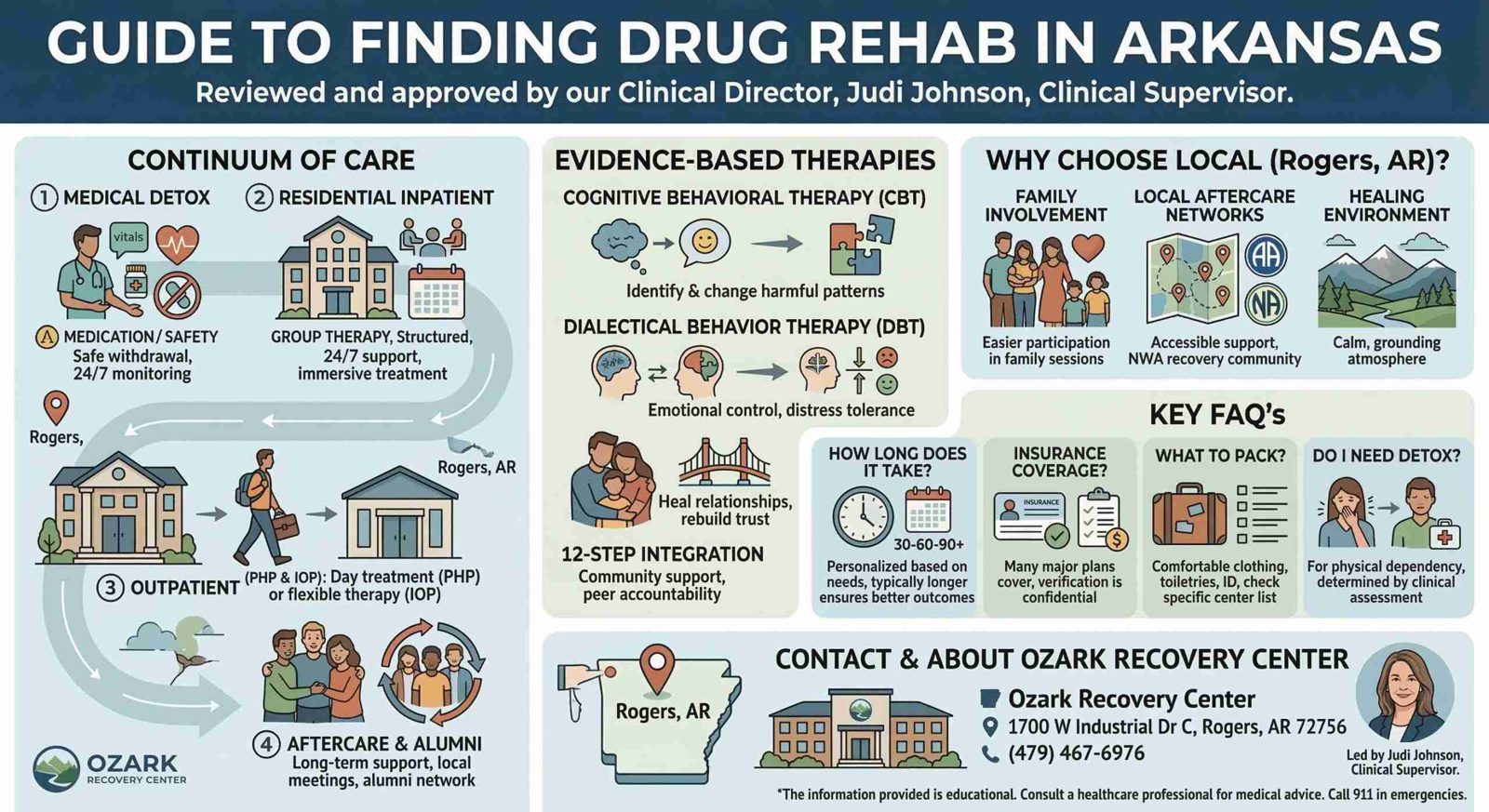
When a person has developed a physical dependence alongside psychological triggers, attempting to quit cold turkey can be both ineffective and medically dangerous. Residential Inpatient treatment becomes necessary to provide a structured, trigger-free environment where the individual can focus entirely on healing.
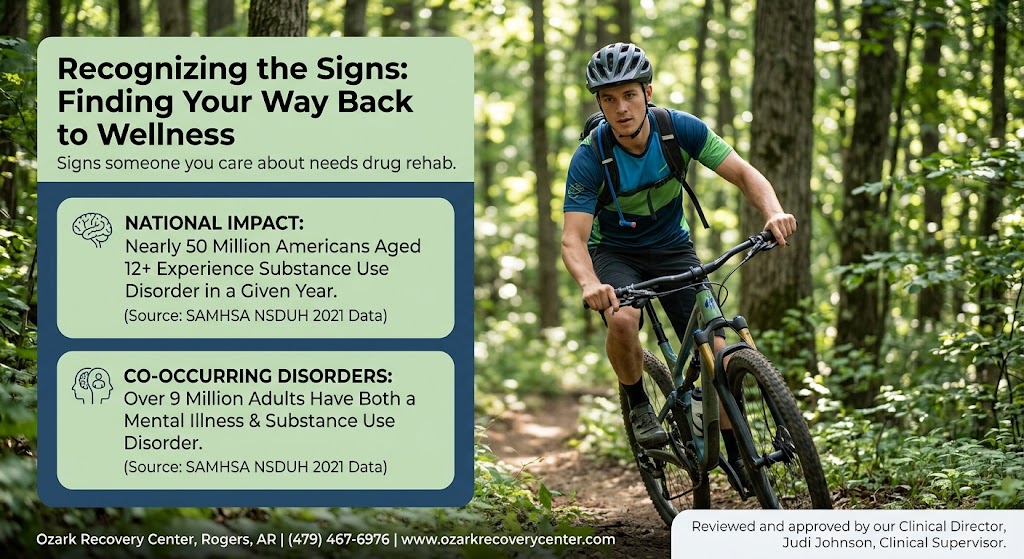
Furthermore, many individuals struggling with addiction also suffer from co-occurring mental health conditions, such as depression, anxiety, or trauma. At Ozark Recovery Center, our Dual Diagnosis programs ensure that both the addiction and the underlying mental health disorders are treated simultaneously through evidence-based therapies like Cognitive Behavioral Therapy (CBT) and Dialectical Behavior Therapy (DBT).
How Ozark Recovery Center Supports NWA Families
You do not have to navigate this crisis alone. Located right here in Rogers, Arkansas, Ozark Recovery Center provides a safe, compassionate, and highly structured environment for recovery.
Our treatment services include:
Outpatient Programs (IOP/PHP): Step-down care to support the transition back into everyday life.
Family Therapy: Addiction is a family disease. We actively involve families to heal broken relationships, establish healthy boundaries, and build a sustainable support system.
Reach Out for a Confidential Consultation
If you are concerned about a loved one’s substance use, taking action early can save their life. Our clinical team is ready to listen, evaluate the situation, and recommend the appropriate level of care.
Ozark Recovery Center
📍 1700 W Industrial Dr C, Rogers, AR 72756
📞 (479) 467-6976
Serving Rogers, Bentonville, Fayetteville, and the greater Northwest Arkansas community.